
The Surprising Reasons Teeth Can Crack
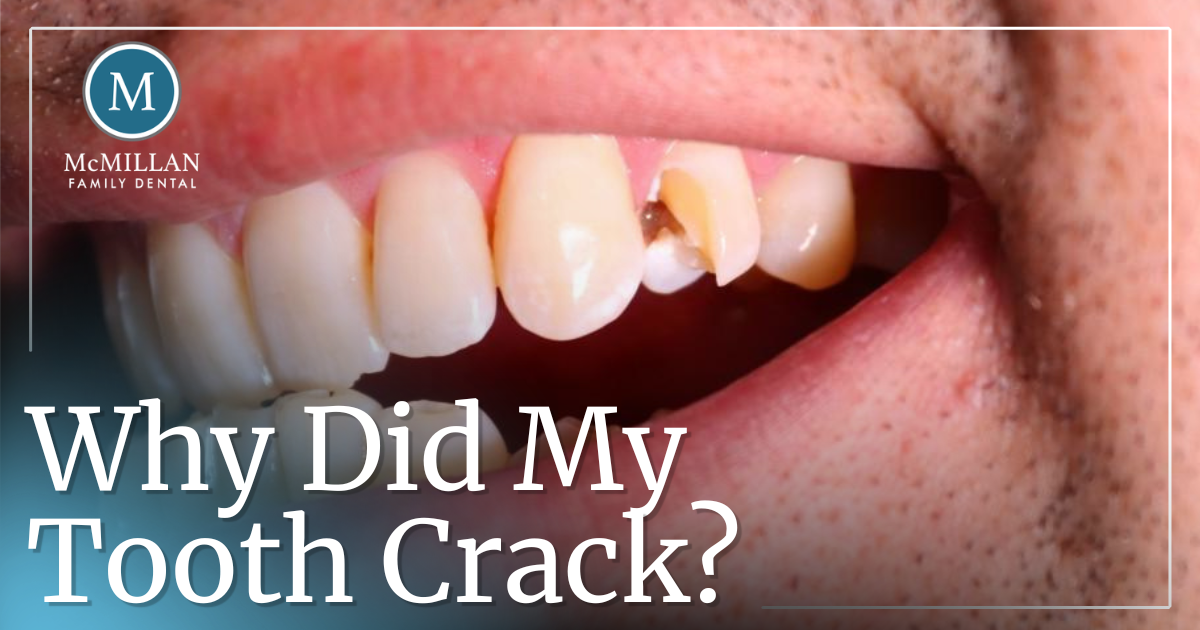
You bite into a sandwich and suddenly feel something sharp or a tooth starts to feel sensitive when you chew — and surprise! It’s cracked. Your first question might be, “How did that happen?”
A cracked tooth doesn’t always result from one memorable moment. Sometimes the damage develops gradually, after years of biting, chewing, grinding, and daily use. The moment you notice the problem may simply be the final chapter in a much longer story.
Teeth Work Hard
Think about how many times your teeth come together during an average day. Multiply that by decades. Healthy tooth enamel is remarkably strong, but teeth can still become vulnerable over time. For example, a tooth with a large filling has less natural structure remaining than an untouched tooth. Wear, past damage, and repeated stress can also gradually compromise a tooth. Then one day, you bite into something and feel a twinge. Your food choice may not be to blame, simply the last straw.
Clenching and Grinding Can Add to the Stress
Not all the work your teeth do happens while you are eating. If you clench or grind your teeth, especially during sleep, you may be placing additional force on them without realizing it. Over time, those forces can contribute to wear, small fractures, or other changes in tooth structure.
You may notice flattened or worn teeth, morning jaw fatigue, or occasional sensitivity. But some people have few obvious clues until a tooth begins causing trouble. That’s why we look at patterns across your mouth rather than focusing only on the tooth that hurts.
Diagnosing a Cracked Tooth
Cracks do not all behave the same way. One tooth may hurt when you bite down or when you release your bite. Another may suddenly become sensitive to temperature. Some cracks cause intermittent symptoms, while others may cause little discomfort at first.
Because tooth pain can be hard to pinpoint, you may not even be sure which tooth is involved. An examination lets us investigate what you are feeling and identify the underlying problem.
Treating a Cracked Tooth
What happens next depends on the location of the cracked tooth and the extent of the damage. We may place a crown to cover and reinforce a tooth with significant damage. If the crack is less severe, we may recommend a different approach, such as dental bonding.
Don’t Wait for Pain
A newly cracked tooth isn’t always painful. Sometimes the first clue is that chewing feels different, the tooth has become sensitive, or something suddenly doesn’t feel quite right. Those changes are always worth mentioning.
If a tooth starts feeling different when you bite or chew, schedule an appointment with McMillan Family Dental located in Meridian, ID. We’ll take a closer look and determine what your tooth needs to stay healthy, strong, and functional.