
Why Does Your Dentist Care About How You Breathe?
When you think about what your dentist pays attention to, teeth and gums probably come to mind first, but what about breathing? The way you breathe connects to what is happening in your mouth, especially tongue position, jaw and facial development, sleep, and oral function. That is why you may occasionally hear us ask questions that seem to go beyond your teeth.
At McMillan Family Dental, we believe good dentistry means looking at the person attached to the smile. That includes paying attention to how you breathe.
Your Mouth Does More Than Chew
Your mouth plays a major role in many daily functions. You use it to eat, speak, swallow, and breathe. Your tongue, jaws, teeth, and surrounding muscles all have roles to play, and they work together. Even when you’re not eating or talking, something is happening. Your tongue has a natural resting position, and you continue breathing and swallowing throughout the day and night.
When those patterns are functioning well, you probably do not think about them at all. When they are not, however, they can provide useful information about oral and facial function.
Nose or Mouth: Does It Matter?
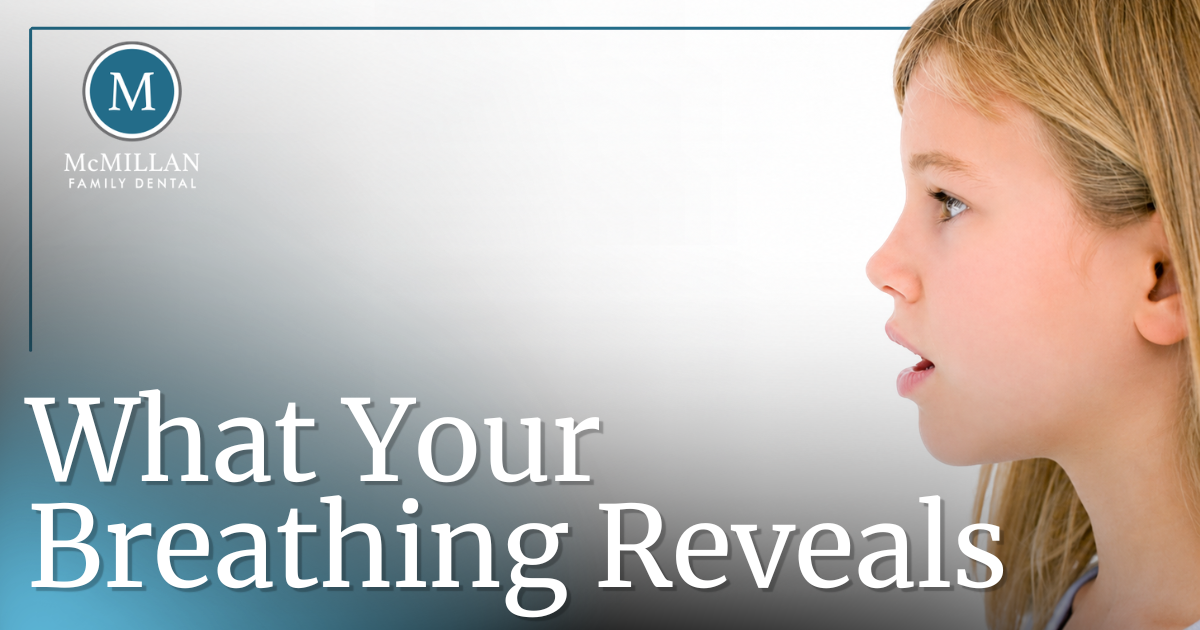
We are naturally designed to breathe primarily through the nose. Occasional mouth breathing is normal, such as when your nose is temporarily congested. Persistent mouth breathing, particularly in a growing child, is something worth noticing.
Breathing, tongue position, and swallowing are connected to the way the mouth and face develop. The tongue normally rests against the roof of the mouth, where it can help support normal oral development.
If someone routinely breathes through the mouth, the tongue may spend more time in a lower position. Over time, these functional patterns can be part of the bigger picture we consider when evaluating jaw development, tooth position, swallowing, and airway health.
What Might We Ask About?
Clues can show up outside the dental chair. Does your child frequently breathe with their mouth open? Do they snore? Do you? Have you noticed difficulty swallowing or speech concerns? Does someone in your family consistently wake up feeling tired despite spending plenty of time asleep? Loud snoring, interrupted breathing during sleep, or persistent daytime tiredness may warrant further evaluation for a sleep-related breathing disorder.
None of these observations gives us a diagnosis on its own. Instead, they give us information and help us determine whether there’s something worth exploring further.
Growing Smiles Give Us an Important Opportunity
Breathing and oral function can be especially interesting when we’re caring for children because their faces and jaws are still developing. At McMillan Family Dental, one approach we may consider for certain children is Advanced Lightwire Functional (ALF) therapy.
ALF therapy uses a customized, lightweight dental appliance designed to gently support jaw and facial development, encourage better tongue function, and create appropriate space for the tongue. It may be considered when concerns involve breathing, swallowing, tooth alignment, or craniofacial development. ALF therapy is also available for adults when appropriate.
As with any treatment, not every patient needs it. The first step is understanding how the individual is functioning and determining whether treatment could be beneficial.
Breathing Matters at Night Too
How you breathe while you sleep can affect much more than whether the bedroom is quiet. Obstructive sleep apnea involves repeated interruptions in breathing during sleep. Because these episodes interfere with restful sleep, someone may wake up feeling tired even after seemingly spending the entire night in bed.
Dentistry can play a role here too.
For appropriate patients with diagnosed obstructive sleep apnea, a custom oral appliance can help keep the airway more open by positioning the lower jaw forward during sleep. This is another example of why we sometimes look beyond teeth when thinking about oral health.
It’s All Connected
Our philosophy is that we’re treating people, not just teeth. Paying attention to breathing, sleep, swallowing, jaw development, and oral function helps us see a more complete picture of the person sitting in our chair.
If you have questions about your breathing and sleep or have noticed mouth breathing, snoring, or other functional concerns in your child, schedule an appointment with McMillan Family Dental located in Meridian, ID. We will listen to what you have noticed, evaluate oral function, and help you understand whether additional evaluation or treatment may be appropriate.