
Solutions Beyond CPAP
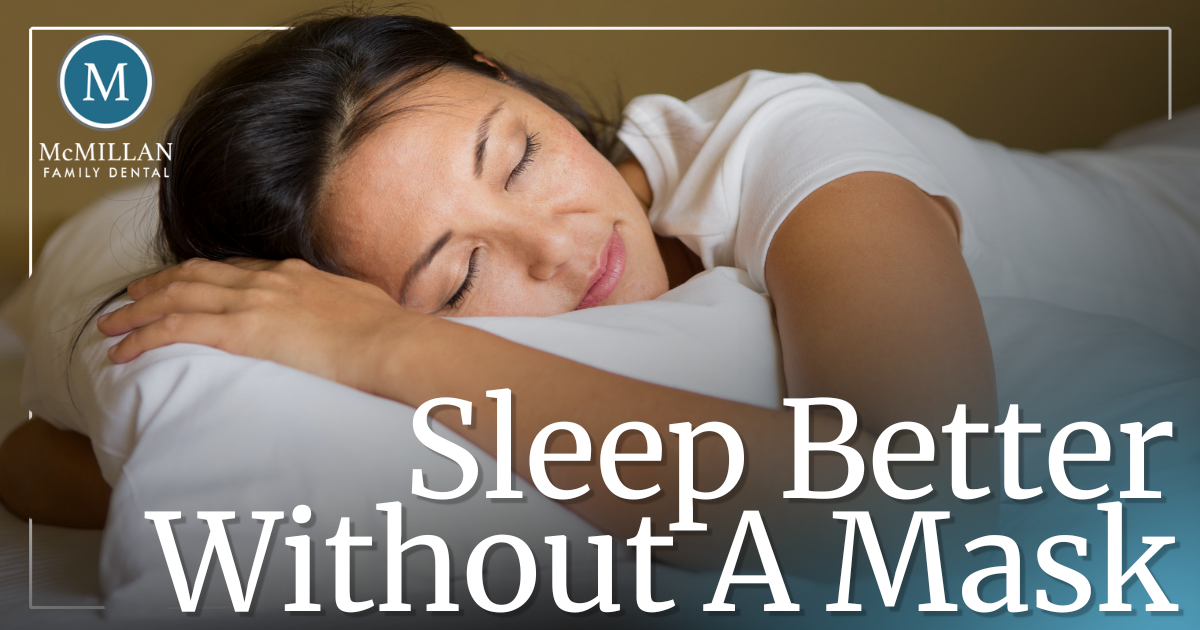
CPAP works well for severe sleep apnea, but plenty of patients don’t tolerate sleeping with a mask strapped to their face every night. The hose gets tangled, the air pressure feels uncomfortable, and packing the whole setup for travel can be a hassle. If CPAP isn’t for you, consider getting fitted with an oral appliance to reduce snoring and the symptoms of mild to moderate sleep apnea. Read on to learn more.
Understanding Snoring & Airway Issues
Snoring happens when the soft tissue at the back of your throat relaxes too much during sleep and partially blocks your airway. Air squeezes through the narrowed space, vibrating the tissue and creating the sound. Some patients experience complete airway blockages repeatedly throughout the night, which is also known as obstructive sleep apnea.
Sleep apnea means you stop breathing for 10 seconds or longer multiple times per hour. Your brain jolts you awake just long enough to restart breathing, though you usually don’t remember. Over months and years, this pattern leaves you exhausted, increases blood pressure, and raises your risk for heart problems.
What is CPAP?
CPAP pushes pressurized air through a mask to keep your airway open. It’s effective but requires commitment to wearing the mask consistently. Studies show that about half of CPAP users quit within the first year because they can’t get comfortable with it. That’s where an oral appliance can be a realistic alternative for patients with mild to moderate apnea or for snorers without sleep apnea.
How Oral Appliances Work
An oral appliance looks like a sturdy mouthguard that covers your upper and lower teeth. The device holds your lower jaw slightly forward, which pulls your tongue away from the back of your throat. This repositioning keeps your airway more open while you sleep.
To get your custom oral appliance, we first need to take impressions of your teeth and send them to a lab that fabricates the piece to fit your mouth precisely. Most designs allow for small adjustments so we can fine-tune how far forward your jaw sits. Too little advancement doesn’t help enough, while too much can make your jaw sore. Finding the right position usually takes two or three adjustment appointments.
Once you have your oral appliance, you will insert it into your mouth right before going to bed and take it out when you wake up. Most people adapt to it within a week or two, though some jaw soreness is normal initially as your muscles adjust to the new position. The oral appliance needs annual checkups to ensure it still fits properly and that your bite hasn’t shifted.
Finding Out if an Oral Appliance Is Right for You
Schedule a consultation at McMillan Family Dental at our offices located in Meridian, ID if snoring or suspected sleep apnea is affecting your sleep quality or your relationship. We will:
- Determine if your sleep apnea severity falls within the range where oral appliances work effectively
- Take impressions and measurements to design your custom device
- Schedule fitting and adjustment appointments to optimize jaw positioning
- Coordinate with your sleep physician for follow-up testing to confirm the appliance is controlling your sleep apnea and snoring
Most dental insurance covers a portion of oral appliance therapy when a sleep physician has diagnosed sleep apnea. Medical insurance sometimes covers it too, since sleep apnea is a medical condition. We’ll help you understand your benefits before starting treatment.
Call us today to learn more and start your journey to better sleep!